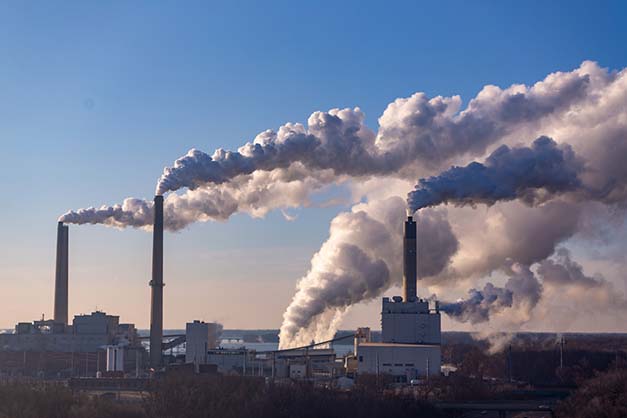
In this special crossover episode of CleanLaw and Shift Key, Heatmap News’ weekly podcast on decarbonization and the shift away from fossil fuels, EELP’s Founding Director, Professor Jody Freeman speaks with Shift Key hosts Robinson Meyer, the founding Executive Editor of Heatmap News, and Jesse Jenkins, Professor of Energy Systems Engineering at Princeton University.
They discuss the Trump administration’s proposed finding that carbon dioxide and other greenhouse gases are not dangerous pollutants and the potential for EPA to soon surrender its ability to regulate heat-trapping pollution from cars and trucks, power plants, and factories. They also talk about whether Trump gambit will work, the arguments that the administration is using, and what it could mean for the future of US climate and energy policy.
Transcript
Robinson Meyer:
You are listening to Shift Key, a weekly podcast from Heatmap News. On this week’s show, the Environmental Protection Agency is trying to claim that carbon dioxide is not a dangerous pollutant under the Clean Air Act. How does their argument work? Where could it fail? Where does it go wrong? And what does all of this mean for the future of climate regulation in the United States? We’re joined by Harvard professor, Jody Freeman, and it’s all coming up on Shift Key after this.
Hi, I’m Robinson Meyer, the founding executive editor of Heatmap News.
Jesse Jenkins:
And I’m Jesse Jenkins, a professor of Energy Systems Engineering at Princeton University.
Jody Freeman:
And I’m Jody Freeman, a professor of law at Harvard Law School.
Robinson Meyer:
And this is a special crossover episode of the CleanLaw Podcast from the Environmental and Energy Law Program at Harvard Law School and Shift Key, Heatmap’s Weekly podcast on decarbonization and the shift away from fossil fuels.
This is a meeting of the minds to try to wrap our heads around and understand the Trump administration’s major announcement that they are going to try to rescind and revoke the EPAs, the Environmental Protection Agency’s longstanding finding that carbon dioxide is a dangerous pollutant, and therefore should be regulated as such under the Clean Air Act.
We have here with us the Shift Key team, me, Jesse, folks who think about climate from the decarbonization side, and Jody Freeman, as CleanLaw listeners will know, an architect of a lot of our Clean Air Act regulation around greenhouse gases and carbon dioxide.
Jody, it’s so great. What a perfect guest to have for this conversation. Let’s start here. So last week the EPA and a number of Trump officials, the Secretary of Energy, some Indiana State officials, some congressmen fittingly at an Indiana car dealership, announced that they had begun the process of rescinding a document called the Endangerment Finding.
I wonder before we start, I mean, there’s lots of context I could give here, but can you just introduce people to what is the Endangerment Finding and why is it important?
Jody Freeman:
Sure. Let me just say though, it’s great to be doing this together. This is a lot of fun and it’ll be really interesting. Let me start by providing a little context. So the Environmental Protection Agency regulates greenhouse gases in the US economy, just like other pollution. It does it using a foundational law from 1970 called the Clean Air Act. And it has the authority to do it because the Supreme Court back in 2007 held that greenhouse gases are pollutants, and if they endanger health or welfare, that’s the phrase in the Clean Air Act, then the EPA has to set standards for it.
And in 2009 in the Barack Obama administration, the EPA did make this Endangerment Finding. It’s a scientific determination that basically says, “Yes, greenhouse gas pollution causes harms, greenhouse gases accumulating in the atmosphere causes a variety of harms. And we know that from all the studies, from the time, the comprehensive scientific assessments, from the National Climate Assessment and from the National Academies of Science and from the IPCCC. We see the scientific consensus that greenhouse gases pose serious risks and cause harms and so we must regulate them.”
And that finding is the pillar, that finding is the foundation for all of EPA’s rules, for all the major emissions from our economy, in every sector, power plants, cars and trucks, methane from oil and gas facilities. So everything rests on it or a finding that is analogous to it for each sector. If you pull that out, if you pull the cornerstone out and you say, “Well, we’re rescinding it.” You’re essentially pulling out the legal basis for all these rules and all those rules would have to be rescinded too, they would fall too.
And so what this boils down to is that EPA has announced that it’s going to rescind the scientific and legal predicate for all federal rules trying to limit greenhouse gas pollution. That is our major tool. The Clean Air Act is our major tool for controlling greenhouse gases, for trying to address climate change. And so it’s really saying, “We’re not going to do that anymore.”
It’s drastic. It’s striking. And the legal theory underpinning this proposal is to be polite about it, I might use a word like inventive, to be less polite, I might say something like strained. And if I were in certain advocacy corners, I might say, “Cuckoo for Cocoa Puffs.”
Jesse Jenkins:
And Jody, we should probably add for our listeners that you worked in the Obama administration as a counselor on climate and energy law during the period when the first Endangerment Finding was crafted. Maybe you could just further briefly walk us through the logic behind the original Endangerment Finding and then we can talk about what they’re doing to try to undermine that logic in the current order.
Jody Freeman:
Yes. I was there in the White House when the Obama administration made the Endangerment Finding and then made the subsequent first ever greenhouse gas rules for cars and trucks, which flowed from it and so on. The context I would give you is this, when President Obama took office, there was already a strong scientific consensus about this and we had various reports, not just international but domestic saying so.
And what had not happened though was that the EPA hadn’t made the official finding under the Clean Air Act. And that’s because the George W. Bush administration prior had refused, even after Supreme Court’s decision basically saying to them, “You were wrong in refusing to make a decision about endangerment.” Because they had refused to make a decision one way or the other. The George W. Bush administration said, “Yeah. We’re not going to do it. We’re going to run out the call.”
Jesse Jenkins:
They just ran out the clock basically. Yeah.
Jody Freeman:
We’re going to run out the clock. So if you recall, Obama had campaigned on doing something about climate change. Incidentally, just as a reminder to go back in time, so had John McCain, just to note, different era.
Jesse Jenkins:
At that point, it was a bipartisan consensus that one should-
Jody Freeman:
Different era.
Jesse Jenkins:
… think something about this.
Jody Freeman:
But anyway, so this was, and for those of us who came in to work on climate and energy, I came into the White House in the new office of Energy and Climate Change, and for those of us who worked on this issue, the very first step would need to be delivering on that decision. And that is what EPA did after going back and looking at the huge record that had been built on the science, and then we also were preparing to set the first standard that it would trigger.
And this particular Endangerment Finding was linked to car and truck emissions. So if you make it, you automatically have to set those standards. And so we were working on doing that as a first step. And I actually negotiated that first set of standards with the auto companies at the time, and they ended up supporting it and even defending it in court. So it was quite different era, quite different time.
Robinson Meyer:
And my understanding is since then the US has regulated, or the EPA has regulated greenhouse gas emissions from cars and trucks several times. There have been continually updated regulations restricting and guiding greenhouse gas emissions from cars and trucks.
Jesse Jenkins:
If my memory serves me, the first Trump administration did attempt to basically roll back and replace the Obama administration’s Clean Power Plan, which was the application of the Clean Air Act to regulate greenhouse gas emissions from the power sector. But they did not say, “We’re not going to regulate greenhouse gas emissions from the power sector.” They just replaced it with a proposed rule that was very, very toothless, very weak. But they did not go after this core concept, the sort of idea that greenhouse gases are a threat. They just simply said, “The regulation we’re going to apply in the power sector is basically coal plants should be reasonably efficient.” And that was about it at the time.
Jody Freeman:
They rolled back every rule from the Obama era, not just the Clean Power Plan that was meant to address pollution from that sector, but also these car and truck standards. They rolled them all back.
And so the strategy was quite familiar because virtually every Republican administration you would expect would roll back regulatory standards, weaken them using some combination of economic and technology arguments. Very familiar thing to do. We see a pendulum swing in Republican administrations. We see another pendulum swing the other way in Democrat. So we’re used to that.
What they did not do, as you said, Jesse, was they didn’t say, “We’re going to go look at the scientific foundation again.” And the reason is everybody understood it was too solid, and that would be way too legally risky to try to defend in court the idea that you’d go in there and say, “Hey, climate science, we’re not so sure.” Would get you laughed out of court.
Now it looks really different now because the Trump 2.0 approach seems to be we’re going for broke, we’re swinging for the fences. I suspect that they think that they have a sympathetic Supreme Court and want to create every possible argument that they might get five justices to go for. But when we get into the proposal, we can talk a little bit about their main argument and their backup argument and how their argument unfolds, but they’re certainly going well beyond what they did the first time around.
Jesse Jenkins:
Yeah. Let’s talk about that argument. Maybe you can do your best to sort of steel man it for us. Walk us through the logic they’re trying to put together for why greenhouse gases from American industry or cars and trucks or power plants should not be considered a danger to American public health.
Jody Freeman:
Right. So let me just say one thing to set the scene, which is that even before they announced this proposal, they had already announced that they were going to eliminate the rules for power plants completely. Again, not a rollback, not a weakening, completely. And what was the theory? The theory is we need to set a threshold for significant contribution to climate change.
And the law says the sources have to contribute significantly. And our assessment is they don’t. And there’s no point in us regulating them because it won’t matter given how small a percentage they are. So we’re not going to do it at all.
So that proposal already out there. And essentially what’s going on here is a version, is a cousin of that for the transportation sector for cars and trucks, but it has some more bells and whistles, and it does something even more profound because that power sector rule, they never talked about rescinding the Endangerment Finding, and now they are.
Jesse Jenkins:
So they weren’t attacking the idea that greenhouse gases are a threat to public health. They’re simply saying that the power sector in the United States, which produces about one and a half billion tons of greenhouse gas emissions and would rank sixth in the world if it were its own country in terms of overall greenhouse gas emitters behind only China, the US, India, the EU, and Russia.
Jody Freeman:
Yeah.
Jesse Jenkins:
But putting that aside, that was not a significant enough contribution to global climate change and that it should be considered worth regulating. Here they’re simply saying, “No matter how much you pollute in terms of greenhouse gases, it shouldn’t matter because greenhouse gases are not really a threat to public health.”
Jody Freeman:
Well, they’re doing both. What they’re doing is main argument and backup argument. So the reason I say it this way is, first of all, that was great context to suggest that the power sector emissions in our country, first of all, it’s our second-largest sector, the biggest is transportation, right?
Jesse Jenkins:
Yeah. It’s nearly a quarter of our emissions over a fifth.
Jody Freeman:
Right. But it’s big. There’s just no way to look at the power sector and go, “Yeah. It doesn’t matter much.” But in this proposal announced last week, what they say basically is that they have to set these standards in a couple of steps. And the statute says that the administrator shall prescribe standards. Bear with me here, for any air pollutant from any class of new cars and trucks that in the administrator’s judgment causes or contributes to air pollution reasonably anticipated to endanger health or welfare.
What did I just say? You have to have an air pollutant that comes from the sources, cars and trucks. It has to contribute to air pollution that is dangerous for people’s health and wellbeing. The air pollutant presumably is CO2, greenhouse gases from cars and trucks contributing to air pollution, which is presumably greenhouse gases in the atmosphere that is dangerous or reasonably anticipated to be dangerous. So it’s even more cautious for human health and wellbeing.
And so in the past, in 2009 when EPA made the Endangerment Finding, they said, “Well, greenhouse gases are dangerous for human health and wellbeing. We can point to all the things, more intense weather events and erratic weather events, more intense hurricanes, sea level rise, flooding, heat waves, pathogens, you name it that directly impact health and wellbeing and also incur huge economic losses.”
And so greenhouse gases have these hugely adverse effects and pose these very dangerous risks. And cars and trucks produce an air pollutant because the Supreme Court said, “Greenhouse gases are air pollutants and they contribute to this problem because look at the biggest shares of our economy that contribute to the problem.” So that is the math of how EPA went about this.
Okay. Now the proposal says, number one, not an air pollutant, wrong. These greenhouse gases from US sources, they’re global pollution, they’re global, they’re not local, and we only have the authority to regulate local pollution. Number two, they don’t contribute because here’s the threshold argument again, they’re teeny tiny.
We can slice and dice it down to the class of car and show you how this is just too tiny a share to matter. And third, there’s a causation problem here because our emissions, these emissions from these sources, they don’t matter to the adverse impacts down the road from climate change. That’s way too attenuated and way too remote, and you can’t link it back to us. So for all these reasons, we fail this test in the law and we have to conclude that we don’t contribute to the endangerment.
Now, by the way, none of that questioned the science. Okay? That’s the first argument. It’s about reading the law in a way that makes the US share seem tiny and any effort to regulate it futile and also declares this not to be pollution under the law, which all flies in the face of the Massachusetts versus EPA decision from 2007.
The backup argument, which by the way they did not need. This is an indulgence. I have a view about this, that it’s really a political gesture to the ideologically anti-climate people because they don’t need it to make the first argument. But their backup argument is the science is no longer reliable. The studies were overly pessimistic, updated empirical work and peer-reviewed studies, and everything we know now tells us that on net, global warming is beneficial, that the bigger threat is getting colder and so on.
And so it’s a critique of the science, and it’s based on, largely on, it’s based largely on a new DOE report, Department of Energy report that was commissioned by Chris Wright, Secretary of Energy and written by five people who are well credentialed scientists who have some mainstream publications, but who are very well known for their outlier views.
Robinson Meyer:
And who also, I’m going to borrow an argument that I know is we’re going to hear more of in the next few days. But I think just glancing at the report they’ve put out that’s questioning climate science. They’re poking little holes. They’re saying, “Oh, the models have run hot.” If you read, it’s a very carefully, speaking of legalism, it’s a very carefully legalistically creative report because it has all these small findings that seem to suggest the larger finding is wrong, but don’t actually say the larger finding is wrong-
Jesse Jenkins:
That they don’t actually are.
Robinson Meyer:
… and the interesting thing is the Trump administration officials have already gotten caught in this. So Secretary Wright tweeted today the ceaseless repeating from the media, politicians and activists claiming that climate change is making weather more dangerous and severe is just nonsense. That is not true. That’s wrong. That’s climate denialism.
And it’s actually quite significant because it’s the first time I think we’ve seen Wright move from this like, “Well, climate change isn’t so bad. It’s been overstated.” To outright saying something factually untrue about climate change. It’s actually really significant change for him.
Jody Freeman:
But there are two things here that really matter, right? He’s revealing something, which you’re getting at. But there’s also this report, as you say, that the five scientists have authored which say things that have many of which have been just debunked over time. There’s this allegation about satellite data being inaccurate and so on. It goes through and through various things that other scientists have already debunked about their prior work, but there’s also the EPA’s proposal itself, which is relying on this and EPA’s proposal itself adopts much of this.
So you have to realize what’s going on here. It’s EPA’s proposal and they’re basically taking the Chris Wright commissioned report as if it’s the foundation for what it should be. Instead of looking at the bulk of climate assessments, right? Climate science-
Jesse Jenkins:
Like the congressionally mandated National Climate Assessment?
Jody Freeman:
Which Trump disbanded, which involves well over a dozen federal agencies including NASA, DOD, and so on, which is the normal way the United States federal government speaks about the risks of climate change. It takes 15 or so agencies and it commissions reports from-
Jesse Jenkins:
And 500 plus authors. Yeah.
Jody Freeman:
… hundreds and hundreds of scientists in an open process as peer reviewed. But no, instead we’re going to rely quite heavily on five people we handpicked for this. So this is what’s so unusual. Let’s use that word.
Robinson Meyer:
Totally, but I think in that sense, he’s trying to summarize this line from the executive summary of the report that says, “Most extreme weather events in the US do not show long-term trends.” Okay. Well, that just means you can’t point at a line and say the number of blizzards have gone up or the number of thunderstorms have gone up or something.
“Claims of increased frequency or intensity of hurricanes, tornadoes, floods and droughts are not supported by US historical data.” And I think Wright is taking those lines. I mean, I’m interpolating a little here, but he’s taking those lines and then saying, “Oh, weather hasn’t gotten worse.” But in fact the enumeration of hurricanes, tornadoes, floods and droughts is quite intentional because we know heat waves have gotten much worse.
Jody Freeman:
Yeah.
Robinson Meyer:
We knows extreme rainfall events have gotten much worse.
Jody Freeman:
The overall conclusion they’re trying to make is a lot of things vary all the time naturally and these drastic, these dramatic events really haven’t gotten worse over time. You shouldn’t believe that. And some of this peaked in the 1930s, in fact. But here’s the thing, I’m not a climate scientist, nobody should take my word for it. You should just look at the scientific response to this, which I’m absolutely certain has already begun and is coming.
It’s already being published, the things you’re saying, Rob, this is going to be completely destroyed. What I want to point out is this is a backup argument that says, “We also doubt the science and you, the courts,” it’s aimed at the courts ultimately. If this proposal goes final in this form, remember it still is going to have to be subject to comment and they can change some things. But if it were to go final in this form, they would really be saying to the courts, “You should defer to us on our scientific assessment. We should have a lot of discretion here because the courts don’t know the science.” And so there’s a play here to say, “We should have maximum space to exercise our discretion.”
Jesse Jenkins:
Doesn’t that directly contradict the Chevron rulings that the court has recently made, which is basically, no, they don’t have to do that anymore and the courts can step in and overturn agency expertise?
Jody Freeman:
Here’s the nerdy part of that. That case that was overturned that everybody talks about, the Chevron case, was overturned in a case called Loper Bright. What the Court said there is, “When it comes to interpreting the meaning of the law, the meaning of the statute, the meaning of the term say, ‘air pollutant.’ Okay? That’s for us, the courts, we’re not deferring to you on that. We judges know how to do that.” However, when it comes to fact-based decisions like scientific determinations, the agency is not subject to that Chevron or Loper Bright standard. The agency is subject to what we call arbitrary capricious review.
So under the legal standards that courts use, actually agencies get the most deference still for their factual determinations. Here’s the problem. The test for arbitrary or capriciousness, I don’t believe this proposal in its assessment of the science can get past it. The Court in the past has said something’s arbitrary capricious. There are unsupported assertions, there are gaps in the logic, it goes against the weight of the evidence.
These are the indicia. These are the indicia of arbitrary capriciousness. So that’s like from Supreme Court precedent. So I honestly don’t understand how they can get past arbitrary capricious review, but they’re certainly making a play for it. That’s why I think the science part of this might just be performative.
Robinson Meyer:
Yeah.
Jody Freeman:
Right?
Robinson Meyer:
And I just want to make a related question, which is you can actually say some of the sentences in the DOE report are right and still believe, you can believe tornadoes don’t show any influence from climate change and still believe heat waves do, and still believe extreme rainfall events do. In fact, you could believe heat waves, the cost of heat waves getting worse could justify the entire regulatory edifice.
Jody Freeman:
See, what I love about you, Rob, right now is you’re kind of incensed about little points might individually sort of be right, maybe each one separately, but none of it adds up to even a in chink the armor.
Robinson Meyer:
Oh, totally.
Jody Freeman:
Right?
Robinson Meyer:
Yeah.
Jody Freeman:
And what’ll have to happen is the scientific community, writ large, en masse is going to have to come back and say, “Even if one or two or three of these sentences could possibly plausibly be actually accurate, it does nothing to change the overwhelming…”
Robinson Meyer:
It doesn’t matter.
Jody Freeman:
Right. But what I think is happening is we’re all getting poked and distracted and tweaked into outrage over science when, in fact, the first argument they’re making is the one where they could actually attract some judges and Justices to say, “Oh, wait. Maybe you have a little more discretion here to set a threshold level. Maybe it matters that you’re saying nothing we do here in the US will make a difference in the end to global, and maybe that is a reason you don’t want to regulate. Maybe we’ll accept that reason.” And that’s what we need, I think, to be more concerned about.
Jesse Jenkins:
So you’re saying don’t get distracted by the fight over the climate science. The scientific evidence is clear. It’s this legal argument that this isn’t an air pollutant because it’s not a local air pollutant that mixes globally with all the other CO2, and we can’t… Each class of cars is a tiny contributor to that, and so we shouldn’t worry about it.
Jody Freeman:
And much of this is a replay or a rehash of arguments that the George W. Bush administration lost in Massachusetts versus EPA. So a lot of this is like, “Let’s take another run at the Supreme Court.
Jesse Jenkins:
At the Supreme Court.
Jody Freeman:
Let’s try to find a hook for them to hang their hat on where they can say, ‘We’re not overturning Mass versus EPA, but we didn’t really address this in Mass versus EPA.’”
Robinson Meyer:
It matches this broader Trump pattern that we’ve seen with independent agencies and other kinds of behavior where they just act like they got a landmark Supreme Court ruling, proceed as if they have a landmark Supreme Court ruling on their side basically to go poke the Court into giving them the landmark ruling they actually want.
Jody Freeman:
Right. I mean, in this case, I think they’re well aware that the five justices from the majority of that landmark Mass versus EPA case have died or retired, and three of the four dissenters are left, and they’ve been joined by what I think the administration would conclude are friendlier forces, friendlier votes, and they’re basically saying, “Can you please revisit this and we think this makes no sense?” And they think they’ll get a friendly audience.
And given that the Supreme Court, since Mass versus EPA has pretty systematically cut back on the potential reach of that case, the limited EPA’s authority. Like you said, Jesse, earlier, the court rejected the Clean Power Plan and said, “No. That goes beyond what you can do under the Clean Air Act. You can’t draft a rule for the power sector that basically requires shifting from one source of electricity, one source of energy to another generation shifting from say, natural gas to wind and solar. That goes too far. Your rule design goes too far.”
So the trajectory has been Mass versus EPA is the high watermark, and the Court has been limiting EPA’s authority to use the Clean Air Act. So I think the administration might be saying, “Well, maybe they’ll go this far too and let us rescind this Endangerment Finding.”
I wanted to make one more point about what they’re doing in the proposal. It’s a little nerdy, but it’s important. They’re also saying, “Hey, when we make this scientific determination, we think it’s relevant to fold in lots of other policy considerations. It’s not purely scientific because when we decide whether the science is there to support that greenhouse gases are dangerous, when we make that assessment, we already can foresee what would happen if we made that conclusion. We can foresee we’d have to regulate, and since we can foresee it, we should just fold in all the costs and we should fold in all the reasons we don’t want to do it.”
So now they talk exclusively of all the terrible regulatory burdens and costs of regulating the lost consumer choice when you can’t choose the vehicle you want, which of course is a very debatable, that it’s not true that that’s what these standards would limit you to driving a little smart car. That’s just not true. And we can fold in the fact that people’s public health would be worse if we set these standards.
Why would it be worse? Worse because it’s expensive to buy these cleaner cars so people will keep driving their old dirty cars and they have the temerity to cite their own Big Beautiful Bill making electric vehicles more expensive, right?
Jesse Jenkins:
Yeah. They cited our analysis at the REPEAT Project of how many less EVs are going to be sold to justify this point.
Jody Freeman:
As part of the reason why it’s going to be expensive, so “People will keep driving dirty cars. So actually these standards, if we set clean car standards, they’ll be bad for you.” I mean, it’s amazing.
Jesse Jenkins:
Yeah.
Jody Freeman:
The boldness. So all I’m saying is-
Jesse Jenkins:
That’s logic. My head is still, and my ears are still turning trying to follow that logic. I don’t.
Jody Freeman:
But what they’re doing is folding all of these non-scientific considerations into what the Supreme Court clearly had said was a scientific determination. And even if you believe it’s appropriate to consider cost of regulation, you should be doing this. The statute says, “You do it when you set the standards, not when you make the scientific determination.”
Jesse Jenkins:
Of course, there’s a huge range of options to set the regulation as we’ve already seen.
Jody Freeman:
Yeah. And the Clean Air Act says, “When you go to set the standards for certain classes of cars and trucks, you should consider cost and availability of technology and so on.” And then the final point I’d make is they don’t even do their cost analysis on the level. They only talk about burdens and costs. They don’t even talk about the benefits of cutting this pollution that would come both economic benefits-
Jesse Jenkins:
Because there aren’t any. They’ve asserted there aren’t any, right?
Jody Freeman:
The whole thing is skewed, bootstrapped, manufactured, and contrived to make it look like it’s futile to regulate because it won’t make a difference. “It’s costly to regulate because the cost drastically outweigh the benefits, and it’s actually bad for you to regulate because your public health will get worse. And for all those reasons, we shouldn’t even be making the scientific determination.” It is extraordinary is the word that comes to mind. Extraordinary.
Robinson Meyer:
I want to just kind of spell out something I think we’ve suggested so far, but I think it’s worth fully spelling out for listeners, which is that since Mass v EPA happens in 2007. Supreme Court says, “You can regulate greenhouse gases, carbon dioxide if you find them to be dangerous.”
2009, Obama says, “Yes. They’re dangerous.” 2009, 2010 Obama administration under your leadership, I should say with your help establishes a kind of landmark first-of-a-kind agreement with the auto companies that they will be regulated, they will be bound by greenhouse gas standards. The standards go into effect, and that means something important, which is at that point then you can use the greenhouse gas standards on mobile sources, which a term of art the EPA uses for cars and trucks.
At the time, there still needed to be regulations for what was at the time the number one source of US greenhouse gas emissions on a sectoral basis, which was the power sector. And since 2010, we have never gotten active, enacted power sector regulations on the book. Obama tried to do Clean Power Plan. We talked about that Trump tried to roll them back. The Biden-
Jody Freeman:
Well, also the Court blocked them.
Robinson Meyer:
The Court blocked them. Right. Exactly.
Jody Freeman:
Issued a very historic stay, which is not the normal way things go. Agencies that adopt rules are typically given the benefit of the doubt. The rule is going to effect, and then they go through legal challenge, and if they get struck down, they get struck down. But the government is entitled to have them operational until they’re legally challenged.
And in this instance, they went to the Supreme Court and Supreme Court issued a stay so that never went into effect. Now, EPA will claim, and I think there’s some truth to it, that the process of setting those standards and doing all the work that had to be done and consulting with the utilities and talking to the regional grid managers and all the things that got done helped to spur the industry to start accelerating its move to wind and solar, which was coming down in cost, as you know, Jesse, you can speak to this better than me, coming down in cost, becoming more competitive, out-competing coal and a market transition was happening anyway because of abundant natural gas that was cheap and wind and solar costs and all that was happening.
But I think what EPA would say is the Clean Power Plan process going through to set those standards, finalizing them, et cetera, helped to spur that market along. So that even though it never got officially implemented, it did some good and the power sector emissions were coming down in any event, but you’re right, Rob, the rule got blocked and then ultimately after Trump came in and rolled it back, they wanted the Supreme Court to rule on the legality of it. They wanted that ruling and they got it. And the Court said, “No. This goes beyond what you can do under the Clean Air Act.”
Robinson Meyer:
Right. They got that rule, even though the Trump administration had already rescinded the Clean Power Plan.
Jody Freeman:
Well, even though Biden came in and immediately, it was made public that they had no intention of reviving the Clean Power Plan from the Obama era. They knew the votes had changed on the Supreme Court. They weren’t going to try it. And nevertheless, the court took the case and issued the decision putting the nail in the coffin of the Clean Power Plan.
So it didn’t put a nail in the coffin of regulating power plants. You just can’t use that method of the design of the rule that really in the Court’s view called for generation shifting.
Jesse Jenkins:
What’s pertinent is that Supreme Court decision notably did not speak to the Endangerment Finding. My understanding is there has been no Supreme Court law decided since Mass v EPA on the question of endangerment. There have been any more of these technical questions of the actual regulatory mechanisms that have been proposed.
Jody Freeman:
Yeah. Even more so the way I’d put it is this. The Supreme Court has never questioned the Endangerment Finding in several cases involving EPA setting greenhouse gas standards. And there was a case called UARG, Utility Air Regulatory Group, and the Court narrowed EPA’s authority about how to regulate, but did not say there’s any problem with the Endangerment Finding or any problem with your authority to use the Clean Air Act for greenhouse gases, and likewise in the Clean Power Plan, they never said that.
And in another case called AEP, which came out soon after Mass versus EPA, which had to do with whether if you set these standards, if EPA sets these standards, does that preclude common law suits, tort lawsuits from proceeding to sue the power companies? In that case, the Court never questions the Endangerment Finding.
So they’ve had many opportunities to throw a little line out there to suggest that, “Hey, maybe you want to come bring this up to us.” And they have never done it.
Robinson Meyer:
I was just going to make the kind of narrow point that they’re able to go after the power plant regulation because for 15 years between multiple presidential administrations, this question of how to regulate greenhouse gas emissions from the power sector has been up in the air and various administrations have made their play, and the Supreme Court has weighed in quite forcefully, but it’s never questioned the Endangerment Finding. But there’s been basically a 15-year-long running battle over how to do this. But what they want to do now is to go a step further and go after greenhouse gases from tailpipes. And the way that they’ve decided to do that is to go after the Endangerment Finding. Like that is the more secure area of law, and that is why they’re really now going after the Endangerment Finding.
Jody Freeman:
So a couple of things. So first of all, Mass versus EPA was a case about car truck standards. It was about this sector and the court said, “Greenhouse gases are pollutants.” In this context, so the idea that they’re not coming back and going, “Oh no, we can only regulate local pollution.” I just don’t understand how they’re not asking to overturn Mass versus EPA‘s central holding.
Second, if you pull out the Endangerment Finding, it’s the rug under which all the other standards are set. So think about oil and gas methane standards for the oil and gas. Now there’s a little hiccup there. It’s more complicated over there because the Congress in the Biden years used the Congressional Review Act to disapprove a weakening of the methane rule.
So it might be that Congress has blocked an unraveling of the methane rule depending on how you read the Congressional Review Act, which your listeners by now, they’re just going to get a drink because they just can’t believe we’re into this stuff. But what the main point is if you pull the Endangerment Finding out, you’re really going for broke, you’re really saying, “We’re done with this Clean Air Act. We’re not using it and we’re not setting greenhouse gas standards.”
And that brings us to, well, should we be fighting this fight again and again and again over how to use the Clean Air Act to regulate emissions when it’s clear that between the Supreme Court and Republican administrations trying to weaken it, we’re getting less and less juice for the squeeze out of the Clean Air Act?
And I mean, I lament this. It’s a very powerful and important statute, but it was never the first plan. Like when Obama won and we all came in there, what was the Obama administration trying to do? It was trying to get a cap-and-trade bill, a national cap-and-trade bill through the Congress, and if you recall, it had a cap on the biggest sector’s emissions. It had an offsetting kind of strategy so we could get the agricultural community involved to sell offsets into this cap-and-trade scheme.
It had energy efficiency provisions. It had a lot of investments in subsidies and tax credits for alternative cleaner energy. It was a big, I hate to say, it was a big beautiful cap-and-trade bill, and it didn’t get out of the Senate. And so even at the time, the EPA administrator, Lisa Jackson, the president himself, all of us who worked on this said, “Look, the Clean Air Act is a second-best strategy, better to have new legislation, but if the Congress isn’t going to act, this is pollution and we have to use the executive tools that we have.”
And that’s what we focused on at the time. But now it’s a different moment and it might be appropriate to ask ourselves, “What else should we be looking to address this problem?”
Jesse Jenkins:
I want to come to that discussion in a minute, but I do think it’s worth maybe we take a minute to talk through that core logic that they laid out. So we talked about the science.
Jody Freeman:
Yeah.
Jesse Jenkins:
This five-person report from the Department of Energy clearly does not undermine the broad scientific consensus, including in the congressionally mandated national climate assessments that greenhouse gas emissions contribute to dangerous impacts on human health. They’re making the argument, as you said, that the threshold, there should be some de minimis threshold above which you have to fall for sectors’ greenhouse gas emissions to be large enough to contribute to that problem. And they’re making a second argument that this isn’t a local air pollutant because it’s a broadly mixed greenhouse gas.
So that first argument that there’s some threshold effect feels like reductio ad absurdum. If the US power sector, that is 5% of greenhouse gas emissions globally and bigger than all but five countries is too small to trigger that de minimis threshold or that the US transportation sector, which is similar in scale is too small. I mean, you can just extend that argument as far as you want to the point where nothing is to be regulated.
Jody Freeman:
Right. The whole strategy is to create a smaller numerator as possible over the global denominator. Right? And so what they’re claiming is we have the discretion to decide how to create that numerator. We don’t have to look at transportation-
Jesse Jenkins:
It’s not the whole transportation sector, it’s just new vehicles, and it’s just this particular slice of new vehicles.
Jody Freeman:
And if you look at the car in my backyard, that’s really small. I mean, I’m exaggerating, but it’s sort of like that. It’s like-
Jesse Jenkins:
And you can do the same thing for power plants. Right?
Jody Freeman:
Of course.
Jesse Jenkins:
You can just go down and down and then now you’re at the level of an individual power plant to know it’s only a million tons a year. This is the extent…
Jody Freeman:
You’re right that this is the strategy. But think about if every country took this approach, nobody would ever do anything to control their emissions
Jesse Jenkins:
Exactly. Which is obvious for predicting…
Robinson Meyer:
But this is actually the way the argument works. The way the argument works is to reconceptualize literally the problem of climate change, which is emitted by millions of machines all across the earth in very small amounts. Everyone bears a small responsibility for… obviously the US, China bear a very large responsibility but-
Jody Freeman:
It’s the collective action problem of all time.
Robinson Meyer:
Exactly. It’s just restating a collective action problem in a legal way so that then it becomes inadmissible as an argument.
Jesse Jenkins:
I mean, can’t you make the same argument about any air pollutant? The small amount of nitrous oxides that come out of my tailpipe are only a tiny contributor and it’s yada-yada?
Jody Freeman:
Yes. I mean, that’s true, but except that they’re making a causation argument too. And here they’re saying local air pollution, we really can show that it causes respiratory disease and, well, but again-
Jesse Jenkins:
But again, you can make the de minimis argument, right?
Jody Freeman:
You can.
Jesse Jenkins:
My vehicle’s tiny contribution to that is undetectable in any epidemiological setting or whatever.
Jody Freeman:
Then you get into the categories in the Clean Air Act for new classes of motor vehicles. What counts as a class? And new source categories, what counts as a category? And what I think the agency is going to wind up saying is some version of, “We have discretion to decide how to slice and dice, and you should defer to our slice and dicing.” But the bottom line is our goal is to shrink the numerator, question the causation, call it global and say, “It’s all futile. And if you believe us on that, we don’t regulate greenhouse gases.”
There’s a deep animating philosophy to this proposal that I think is more generally pervasive in the administration and certainly embodied in Chris Wright, who frankly kind of overshadowed Lee Zeldin in this process. I mean, the EPA administrator is being big-footed by the energy secretary whose deep philosophy, and Rob, you alluded to this earlier, seems to be, “Look it, climate change is not so bad and fossil fuels are great and good for you. And so this climate change stuff is all wrong. And I’m not going to say I’m questioning the science, though I just did, but I’m not going to say I’m questioning the science, but I am going to say the thinking on this is all out of whack. And so we really should just pursue our petro-state super-powerness, which is in our economic and strategic interest and also good for you.” They keep saying, “It’s good for you.” Right?
Jesse Jenkins:
Right. Because the argument being that consuming fossil fuels powers economic development, which is broadly good for human health because a richer society is a healthier society, et cetera. Right?
Jody Freeman:
Right. The real problem is energy poverty. We should do more fossil fuel production to address the real problem. Instead of saying, “Well, sure, energy poverty might be a real serious problem in the global south in particular, but there’s a lot of ways to solve energy poverty that don’t require us to double down on fossil fuels…”
Robinson Meyer:
Not even that. If you took energy poverty seriously as an idea, if you said, “There is no country in the world ever that’s developed without fossil fuels, and so therefore as Americans, our essential duty to the world should be to provide fossil fuels as cheaply as possible to the world.” Then you should want to reduce US consumption of fossil fuels as much as possible.
This is what Norway does, right? And Norway does it for a slightly different reason. They say, “We have these oil reserves. We want to sell as much oil to the world as possible, improve our balance of trade, therefore, we’re going to electrify our full domestic vehicle fleet. We’re going to switch to EVs domestically as fast as we can so we can sell as much oil to the world as possible.” We could do the same thing in the US with liquefied natural gas or oil.
Jesse Jenkins:
And we could say that we’re going to do that while reducing the air pollution associated with production of oil and gas in the United States to make it the cleanest whatever. Right?
Jody Freeman:
But what you’re saying you, guys. What you’re saying is you have to have some self-understanding as having contributed to the problem. There’s obviously absolutely no consciousness around we’re the world’s largest historical emitter because in fact, what they argue is we’re a really small share increasingly, we don’t matter at all. What really matters is China and Brazil and the developing world. And so there’s this amnesiac kind of-
Jesse Jenkins:
So by the way, they’re all trying to reduce their greenhouse gas emissions.
Robinson Meyer:
I actually disagree.
Jody Freeman:
Amnesia. Amnesia.
Robinson Meyer:
I disagree slightly. I think you can get there just on supply and demand alone. You don’t need to think climate. If you think the US should be providing fossil fuels as cheaply to the developing world as possible, then we should be consuming as few as we can so that then we can sell all of our fossil fuel resources to them.
Jody Freeman:
Okay. I like it.
Jesse Jenkins:
Especially when we have affordable alternatives that Americans can use instead, for example-
Robinson Meyer:
We need to move on. We need to move on. Let’s kind of talk through two scenarios. The first is that they put out a final version of the rescinding of the Endangerment Finding, and that’s where things are left. The second thing is that they, let’s say between now and then they put out a final version of the Endangerment Finding and the Supreme Court rules in their favor. What would happen next?
Jody Freeman:
So I wish I could give you the cleanest, most straightforward answer, but of course it depends, first of all, on what is the final form of this proposal? Do they embrace both of their arguments still, the backup argument? Is the science still in there, the stuff they’re putting in there, or do they refine their primary argument in a way that makes it even more reasonable-seeming and plausible-seeming?
And then what happens in the courts? Do they wind up in the Supreme Court and does the Supreme Court find their maximalist argument acceptable? Does Supreme Court say, “We agree. You have no authority to regulate global pollutants.” Which is sort of akin to overturning Mass versus EPA.
And if the Court goes that far, no administration can fix this because that’s the forever determination of what the Clean Air Act allows. But if the court does something lesser and says, “Well, you’re right about this threshold idea maybe, and yeah, it’s okay to consider some of the costs even in the scientific assessment.” Then maybe it’s a permission for an administration to slice and dice this way, but a new administration could calculate differently, restore the Endangerment Finding and regulate.
That’s a possibility. But then you’re in the world of the constraints under which you’re operating using the Clean Air Act, knowing the Supreme Court is hovering over you and has already restricted the ambition of what you can do. And so we’re back to the discussion on should we be sticking with this instrument as the main instrument?
And I guess I would just say to that, we need legislation. We need a price on carbon. That’s another thing these people who say there’s no point in doing anything domestically. What happened to putting a price on carbon? What happened to market failure? What happened to, I know we can’t talk about carbon taxes, but I can’t resist, what happened to a carbon tax?
Jesse Jenkins:
No. Neoliberalism is over. We don’t do that too much of that anymore.
Jody Freeman:
I know. I know. Every time I say anything, it’s, “Oh, you’re so naive.” But what happened to carbon tax? What happened to some kind of… Maybe a sector by sector approach, like maybe Congress could do it.
Jesse Jenkins:
Let’s take it a step higher, right? Clean Air Act regulation, sectoral performance standards are a tool, right? They’re one policy mechanism that can be used to drive technological adoption, to drive down greenhouse gas emissions or to change a sector. But there are lots of other tools in the toolkit. Right?
Jody Freeman:
Yeah.
Jesse Jenkins:
You can charge penalties on things you don’t like, like greenhouse gas emissions. You can provide subsidies for things you do like, wind and solar power or electric vehicle adoption. You can drive R&D policies through the Department of Energy or elsewhere. And so we have a number of different policy mechanisms at our disposal. And I think what’s interesting about the Clean Air Act is that it is generally applied at a sectoral basis. You can have different mechanisms designed for different sectors.
And I think that’s good because one of the reasons I’ve always been critical of carbon pricing is that the single uniform carbon price you might get across a link to multi-sector emissions cap or emissions tax is never going to be the ideal instrument for all of those sectors simultaneously and we should ideally be making progress in all of those sectors simultaneously rather than the sort of conventional idea that we start with the low hanging fruit and then work our way up, because if you recognize that technology is dynamic and changes over time in response to policy and that the political economy changes over time with response to changes in who has power and money and infrastructure changes over time in ways that lock in path dependency, then you don’t want to wait to do the high marginal abatement cost stuff later. You want to move forward simultaneously in every sector at once.
And this is sort of one of the big philosophical or policy design divergences between carbon pricing advocates and traditional economists who view the primary market failure being this sort of uniform damage caused by greenhouse gases and folks like me who are trying to design a policy suite to change the industry and the politics and the technology suite that we have available.
Jody Freeman:
But can I just interject there and say, this is why the Clean Air Act, I mean, I’m not a Clean Air Act fetishist or anything, but I just want to say that it’s a magic statute because Congress built in the idea of technology forcing and adapting the technology.
Jesse Jenkins:
Yeah. That’s what I was going to say is actually I like the Clean Air Act for this reason, because you don’t have to try to apply uniform standards. So what works for oil and gas methane emissions might be totally different than what works for HFCs or what works for the auto industry, for example.
Jody Freeman:
And even built into each of those sectors, you have differentiation because every time you go to set a standard for a class of motor vehicles, you have to consider what technology is available and what the costs are. And so over time, you come back and revisit that and you go, “Oh, new technologies.”
For example, electric vehicle batteries are better and so we can set the miles per gram standard more stringently because we actually have technologies that can do better. And likewise we say, “There’s better methane detection and repair technologies, we have sensors, we have drones, we have all kinds of stuff, and we can expect the companies to use those things and help to drive those things, and we’ll come revisit this later.”
It is a magic ongoing learning mechanism, the Clean Air Act. So having it in the mix to set regulatory standards, I think is extremely beneficial. But if the Supreme Court is narrowing the kinds of things that EPA can do, you have to think hard about, “Is there a better way or is there more supplementary strategies?” Like you said, Jesse.
The problem is the supplementary strategies just got rescinded by the Congress. And so what Biden did was pair two things, right? Biden said, “Yeah. We’re going to use the Clean Air Act for sectoral approaches, and we’re going to have this big set of investments, subsidies, tax credits, to kind of flood the zone with alternatives and build up our capacity.”
Jesse Jenkins:
And make it easier to comply with those standards. Yeah.
Jody Freeman:
And nowhere, however, is there a constraint on the supply of oil and gas. Nowhere is there a cost imposed on the oil and gas industry, so there’s no carbon pricing, so we’re missing a huge lever, but we’re going to do all these other things. And now systematically they’re dismantling all the other things.
Jesse Jenkins:
Each of the other things.
Robinson Meyer:
Well, I think the other thing that we’ve seen, and this is one other aspect of Burgum’s thinking as well that I think is quite interesting is that they conceive of the energy system as explicitly zero-sum and the regulatory burdens they’ve placed on renewables in just the past month suggests that they understand the energy, contrary to what they say about economic growth to energy abundance, whatever they say.
They conceive it as a zero-sum system and they want fossil to own as much of that system as possible, and they’re willing to impose high costs on consumers in order to win the largest market share for fossil that they can. I think there’s no other conclusion from how they’ve acted other than that.
I want to ask a few nitty-gritty questions that listeners may have. Number one, is the Inflation Reduction Act included a definition of carbon dioxide? This was a Carper amendment, from Senator Tom Carper, that defined carbon dioxide as an air pollutant, and at the time it got a little press play for being like, “Oh, this is a big deal. This now grants the EPA the ability to regulate this or shores up the EPA’s ability to regulate this.” Does this matter at all? It’s okay if it doesn’t.
Jody Freeman:
I mean, I think that was the theory proponents of having this included said Congress has explicitly declared now and you don’t have to find it from the generic definition of air pollutant in the Clean Air Act the way that Supreme Court did. Now we’ve got it explicit.
I mean, I suppose it can’t hurt. I’m not sure that argument is successful in the end. It’s saying Congress has spoken to this by quote-unquote, “Amending the Clean Air Act.” I’m not sure for budget purposes that the Court would accept that that transforms the meaning of air pollutant as defined in the Clean Air Act. I think there’s a debate over that.
Robinson Meyer:
Got it.
Jesse Jenkins:
Just to be clear. So meaning that they defined it in the context of a budgetary provision, and so it might only hold in that context but not in the broader regulatory context?
Jody Freeman:
For spending purposes, but an amendment to the underlying statute normally happens in regular legislation and through the normal course of the committee process, not through a budget resolution process. So I’m just a little concerned. I haven’t thought about it long enough to really work out all the arguments, but I’m a little concerned that stating that greenhouse gases are pollutants in the budget bill is enough to count as Congress amending the substantive provision of the Clean Air Act that defines air pollutant as it has been interpreted by the Supreme Court.
So I’m not sure it’s a kind of slam dunk argument there, and I think that there’s a lot of concern about whether that would persuade the Supreme Court.
Robinson Meyer:
We kind of alluded to this earlier, but for a long time the discussion around rescinding the Engagement Finding, trashing the EPA’s ability to regulate carbon dioxide has been that this would open carbon dioxide up to litigation in other forms. You could get traditional nuisance lawsuits. I think there’s common law, considerations against oil companies. This was an argument that we heard for a period of time, is that no longer the case?
Jody Freeman:
So this gets real complicated real fast. So let me be as simple as I can. If the Supreme Court were to say that EPA basically overturned Mass versus EPA and say, “EPA no longer has been delegated from Congress the discretion to regulate greenhouse gases.” It doesn’t have ownership of that anymore. Then, yes, that would open up the possibility of federal common law suits coming through the federal courts claiming tort harms against costs from climate related harms against the oil and gas industry, the power sector, the biggest emitters and so on.
Now they still would have challenges in those lawsuits like proving causation and the rest, and they have answers to those causation problems. But that would all end up going back through the federal courts, and I think the industries don’t want to see that. They don’t want to fight on all those fronts. But if the Court says, “No. EPA has the authority to regulate greenhouse gases. We’re not changing the definition of pollutant. We agree. Greenhouse gases are pollutants. They still are.” Or maybe they accept Jesse and Rob, the argument that Congress amended it in the budget bill to make clear their pollution. Fine. We accept that. But we’re still saying EPA can do it the way it wants.
It can slice and dice it to say, “You only contribute over a certain threshold.” If they defer on that, basically, think of it this way. EPA owns it, but they’re going to decide not to do much about it, and it still precludes all the common law suits because the Court will say, “You still own it and it precludes all the other stuff in the federal courts.”
That would be the magic win for them. Right? The magic win is no tort lawsuits in the federal courts. We get to do what we want, which is nothing or very little. Right? And we’re going to argue the states are preempted and can’t do things either. They’re going for the trifecta. We haven’t mentioned that. But they’re also trying to block state climate policies they don’t like. And so they really want nobody to do anything about climate change.
Robinson Meyer:
That’s pretty clear. Yeah.
Jesse Jenkins:
Right. Right.
Robinson Meyer:
But that’s interesting. I hadn’t realized that they were going to potentially box themselves into this magic win.
Jody Freeman:
Well, I’m not sure they can. I’m just giving you one hypothetical situation.
Robinson Meyer:
Yeah.
Jesse Jenkins:
The last question for you, Jody then, is in light of our prior discussion about the different instruments one might need for different sectors and your expertise over the Clean Air Act and its applications to greenhouse gases, where do you see it being most effective? If we were to keep it in our toolkit, which application, which sector do you think we should be most focused on retaining some role for the Clean Air Act?
Jody Freeman:
That’s like saying which child is your favorite? I mean, really, it’s not going to happen.
Jesse Jenkins:
Yes.
Jody Freeman:
Here’s what I think. I think the Clean Air Act’s approach to setting standards for cars and trucks is really sensible. They’ve been doing it a really long time. Setting pollution standards for greenhouse gas functionally, it’s really no different than setting grams per mile for any other pollutant that comes out of the car. And the motor vehicle standards that Biden set, no matter how you look at those standards, there’s a role, a significant role for internal combustion engines in the fleet mix.
So it’s just not true to say that those standards would’ve, quote, “mandated electric vehicles.” It’s a gradual shift to cleaner technology, which is exactly what has always been done under those provisions, exactly what has been done over time to clean up cars and make internal combustion engines more efficient.
And so I don’t think that’s so radical and I think it’s very much of a piece with what the agency’s already done. And so I think using the Clean Air Act for the transport sector makes a lot of sense and would be a very useful tool. We have, as you said Jesse earlier, the technologies are in the market, battery, electric vehicles, hybrids, they’re in the market. If you don’t acknowledge, that’s just silly not to acknowledge that they’re there and not to say we can produce cleaner transportation as a result and they have to take costs into account, of course. So the timing of it, how fast you go is different question.
Jesse Jenkins:
Yeah. That’s subject to debate or whatever. But yeah.
Jody Freeman:
But directionally it has to be right. The other thing is I would say the oil and gas sector, the majors, the big oil and gas companies, they all have gone out there to say, ‘We’re prepared to control our methane. We know we have to clean up our methane.” They really can’t go out to the world and say, “Natural gas is a bridge fuel. It’s a really important bridge fuel, but we’re going to just keep wasting it all over the place and polluting it in these plumes.” And they know better and they pledged to control it.
And it turns out that rule, the methane rule, which allows for advanced technologies to detect these leaks and then allows for them to repair those leaks within a certain period of time. It’s a really well-designed rule that the industry have plenty to do with. And generally, I would say supports, maybe not the small operators don’t want to do anything.
Jesse Jenkins:
Yeah. I was going to say-
Jody Freeman:
The big guys.
Jesse Jenkins:
… the big ones do, because this is a good example of why sectoral standards can be useful too, is what it does is it sets a floor on the whole sector so that the majors who are pursuing these sorts of mitigation measures don’t need to worry about some smaller wildcat firm coming into undercutting them on price because they don’t care about their longevity and they don’t care about the… Yeah.
Jody Freeman:
They need help with the operators. That PE owns the little guys and they’re just trying to get every last dollar out of them. So, okay, so those are those two sectors.
Now power sector. Look, already the agency’s now constrained. It can’t do sort of something that it’s really smart. The Clean Power Plan really was smart, but they can’t do that. But I still think it’s really important. If you talk to the power companies, they know that market forces are driving them to a cleaner grid anyway. They know that as for all the reasons we talked about, wind and solar is more competitive. Storage is going to come. There are these market forces driving forward and you could say you don’t need to regulate the power sector under the Clean Air Act.
I’m not sure that’s right. You want stable federal standards to be helping drive the market where it’s going. You want to have a floor beneath you. It helps you to have federal standards. Then you can go to the states. If you’re a utility go to the states to say, “We have to do this because of the federal standards, so can you help us with cost recovery? Can you make sure when we make these investments we can get the money back, charging rate payers and so on?”
So I would say using the Clean Air Act still makes a lot of sense. I think stable regulations help business. What they hate is chaos and instability. And right now they’re getting maximum chaos and instability when you say, “We want to pull the scientific finding.” You hear absolutely a resounding silence from most of these sectors, from these industries.
Do you hear the companies coming forward, “Oh, this is the best thing ever, please do this?” There’s no evidence that I’ve seen that companies went to the administration and said, like the auto industry as a whole and the power sector as a whole went and said, “Yeah. Do this.” And that’s telling.
Now they’re not criticizing too much because of course everybody’s cowering in fear because of the vengeful administration that we’re dealing with that’s prepared to punish people who step out of line, so they’re quiet. But I don’t think industry wants this by and large.
Jesse Jenkins:
That seems like a good place to leave things.
Robinson Meyer:
Let’s leave it there. Thank you so much for joining us. This has been great.
And now it’s time for Upshift/Downshift, our weekly look at climate and decarbonization news where each of us brings one item of news to share with the class. And if it’s making us feel more upbeat about the energy transition. It’s of course an upshift. If it’s making us feel more downbeat, it is a downshift. Jesse, what do you have for us?
Jesse Jenkins:
I have I think an upshift for you here, which is a video that Duncan Campbell of the DER task force shared on X recently from Ray Loveless, who is a DIY solar guy who’s posted some interesting videos on his sort of DIY solar experience. And I haven’t been able to get out of my head since then. As I was riding my kids to school on my e-bike this morning, I was thinking about like, “Wow. Why don’t we do more of this?”
So here’s the concept. A lot of people have home generators. Increasingly some of those are battery backups, and those generators have an automatic switch basically that when the grid goes down, it switches you to your generator system and fires it up. So Ray’s concept here is to get around all of the headache and hassle of trying to work through your utility company to get interconnection agreements, to install a solar and battery system, to get all the permits you have to do to do that.
He simply has installed a behind the meter system of solar and batteries. He did it all himself. And so it’s extremely cheap. The entire system costs less than $6,000, including a pretty large battery, 10.2 kilowatt-hours and six kilowatts of peak AC solar system output with inverter. And he’s basically wired it the opposite way. So that generator switch clicks it back over to the grid when your battery is depleted, as opposed to switching from the grid to your battery when the grid goes down.
Robinson Meyer:
That’s cool.
Jesse Jenkins:
And so it’s guaranteed to never backfeed into the system. It’s operating in this disconnected mode whenever you have enough solar stored in your battery to run your house off of. And if you get to a point where your battery depletes itself, it switches so that it’s disconnecting itself and switches your house back onto the grid.
Now I’m going to put aside for a minute the challenges of integrating lots of resources like this into the system. I mean, to be fair, it looks just like, from the grid’s perspective, it would look just like somebody with their own grid-connected solar system with a Tesla Powerwall that’s in net metering 2.0 so they’re not getting as much for their exports as they do for their self-consumption, and they’ve set up their battery system to maximize self-consumption.
It’s basically the same effect on the grid as that, but it means you can guarantee that your system here doesn’t backfeed into the grid. It’s only operating on your side of the grid, your household’s electrical network. And what’s fascinating about this as well, he did all this himself, DIY’d it, put it all together. It only cost a few thousand dollars.
I feel like it means we can’t be that far from someone, and listeners, if you’re working on this, please shoot us a note on email or on social media. It must not be that far from somebody working on kind of a fully appliance sized, if that’s a word, yeah, version of this, right? Something that I can go buy, like I buy a refrigerator or an induction range and just plug it in, and it does that same thing.
Now obviously I got to get the solar panels on my roof or something or on my garage or out on a post in the field, but with as little effort as either plugging directly into a 220-fold outlet or probably something more like the experience of connecting a new EV charger or a new AC replacement for a home essential air system, I might need to get an electrician to come out and pay them 350, $500 to do the final connection to my switch box. But this feels like something that could be quite easy to do that would help get us a much more easy to install consumer-driven competitively marketed product that gets us around the current challenges of high costs of installing distributed energy resources in the US today that doesn’t require us solving the problems of very slow interconnections and utilities being reticent to want to connect your devices to the grid in a timely manner.
So anyway, it’s been kicking around in my head as like what would it take to actually turn this home hack together DIY system into something that was like a safe, reliable consumer product? Would that bump the price from $6,000 to $8,000 or to $10,000? Can’t be too much more than that. And even that is a fraction of what it would cost today if you were to go to Tesla Energy or Sunrun or whoever and try to get a six kilowatt solar system with 10.2 kilowatt-hours of batteries. That’s going to be tens of thousands of dollars on the market today.
So anyway, I feel like that’s an upshift.
Robinson Meyer:
That’s a cool upshift.
Jesse Jenkins:
That’s an interesting innovation going on-
Robinson Meyer:
I think that’s very cool.
Jesse Jenkins:
… declining cost.
Robinson Meyer:
I think that’s very cool.
Jesse Jenkins:
Hopefully somebody’s working on a cool solution here so I can just go and buy this thing from Home Depot and plug it into my wall. But how about you?
Robinson Meyer:
So I have something that I guess in context, if you zoom out, it’s a downshift, but if you look closely, it’s an upshift. There’s a lot of that going around, which is that at least today we’re recording on Monday, August 4th and today Senator Chuck Grassley of Iowa, with I would say the Senate’s best Twitter account, placed a hold on three Department of Treasury nominees, the person who’s slated to be general counsel, the person who’s stated to be Assistant Secretary of the Treasury, and the person who’s slated to be undersecretary of the Treasury.
I’ve heard that Senator John Curtis of Utah has done the same thing, placed a hold on the same nominees that keeps them from moving through the Senate until those holds are lifted unless Senate Republicans were to break the filibuster. And I just want to read Senator Grassley’s rationale for doing this because it actually says it all.
“During consideration, he writes, of the one big Beautiful Bill Act, I worked with my colleagues to provide wind and solar an appropriate glide path through the orderly phase out of the wind and solar tax credits. Ultimately, Congress enshrined in statute a 12-month transition period based on when the projects, quote, ‘begin construction.’ Unquote. What it means for a project to, quote, ‘begin construction,’ unquote, has been well-established by Treasury guidance for more than a decade. Moreover, Congress specifically references current Treasury guidance to set that terms meaning and law. This is a case where both the law and congressional intent are clear.
The Department of the Treasury is expected to issue rules and regulations implementing the agreed-upon phase out of the wind and solar credits by August 18th, 2025. Until I can be certain that such rules and regulations adhere to the law and congressional intent, I intend to continue to object to the consideration of these Treasury nominees.”
And so as we’ve talked about previously on Shift Key, the Trump administration since the one Big Pulchritudinous Bill Act passed has said that it has suggested it might toy with this kind of commence construction or begin construction gateway even though it’s been well-defined in both regulation and the law for a long, long time.
They’ve suggested they might play with it a little. So actually, a lot of projects that think they have going to qualify for these tax credits actually might not. This has irked a number of senators who voted for what they thought was a binding compromise to phase out those tax credits, and now two of them, at least two of them, Senator Curtis and Senator Grassley have placed a hold on Treasury nominees. Is it a solution? No. But look, it’s people fighting back for these policies.
We’ll, of course, continue to follow it and talk about it here on Shift Key. Shift Key is a production of Heatmap News. If you enjoyed this episode, please leave us a review on your favorite podcast app. You can always email us at [email protected] or hey, you can email me, I’m Rob, [email protected]. You can follow me on X at @RobinsonMeyer or on Bluesky or LinkedIn by my name. You can follow my co-host Jesse at @JesseJenkins or on Bluesky at, I believe at Jessiejankins.com. Is that right?
Jesse Jenkins:
Jessedjenkins.com.
Robinson Meyer:
Jessedjenkins.com. Our editors are Jillian Goodman and Nico Lauricella. Hey, you can follow Jillian too at Bluesky at goodjillian.bsky.social. Multimedia editing and audio engineering is by Jacob Lambert and by Nick Woodbury. Our music is by Adam Cromwell. I have no idea which social networks he’s on, but we are very grateful he wrote our theme song. Thank you so much for listening and see you next week.