The Endangered Species Committee met on March 31, 2026, and voted unanimously to exempt “Gulf of America Oil and Gas Activities, which include the avoidance or minimization measures in the National Marine Fisheries Service’s (NMFS) 2026 biological opinion and in the U.S. Fish and Wildlife Service’s (FWS) 2018 and 2026 consultation decision.”[1]
The exemption was based on a national security determination by the Secretary of Defense.[2] The Secretary’s determination focuses on lawsuits brought by non-governmental organizations about the biological opinions that analyze oil and gas activities in the Gulf and that require certain actions to protect listed species.[3] The Secretary stated that this litigation “creates a substantial risk that the applicable biological opinions and incidental take statements will be vacated,” which would halt oil and gas activity in the Gulf and prevent new federal approvals.[4] He stated that litigation also diverts resources away from other federal work related to oil and gas, and that “regulatory uncertainty and instability” caused by litigation “interfere with oil and gas development by disrupting operations that require long-term planning,” citing a single trade press article and statement by one company in one lawsuit.[5] Together, these factors threaten to disrupt domestic oil production, which is “a matter of national security.”[6] The Secretary linked oil production to the county’s ability “to support military operations and readiness,” stated that disrupting oil production would “benefit our adversaries and hurt our allies,” and cited high energy prices that would result from loss of Gulf oil production.[7] The Secretary acknowledged that oil and gas activities do not face a halt of operations today, but stated, “It is necessary for national security to eliminate the threat of vacatur, rather than waiting to see if it materializes.”[8] The Secretary also accused environmental organizations of “threatening new lawsuits to block planned development.”[9]
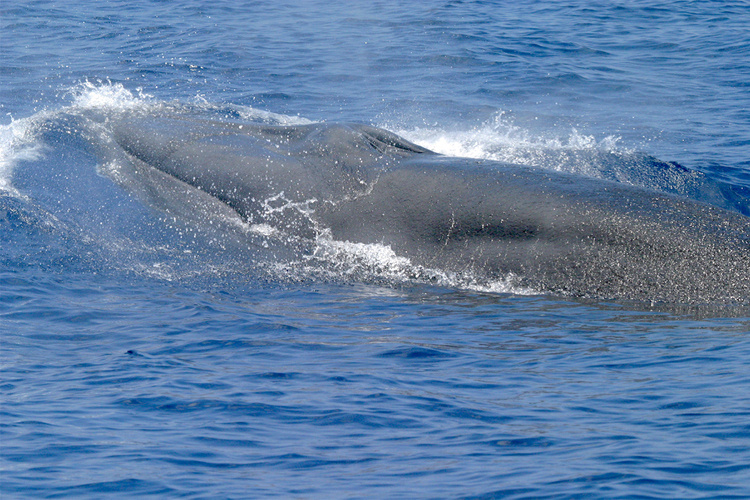
The committee’s exemption order describes its effect as preventing future application of section 7 of the Endangered Species Act to covered activities.[10] However, the order also statutes that “[b]ecause the covered agency action includes robust avoidance or minimization measures” implemented as a result of section 7 consultation, “those measures shall continue to be implemented under this Order.”[11] Thus, if all activities are fully exempt from section 7’s requirements, it is unclear if or how these measures, which included steps to avoid vessel strikes on Rice’s whales, will be enforced under the ESA.
The committee also explained that it views the other requirements of the normal section 7 exemption process as inapplicable when the committee acts on a national security finding: “other provisions of Section 7, including the application requirements and standards, do not apply” and “the Order need not specify any . . . mitigation and enhancement measures because” these requirements “no not apply.”[12]
Following the meeting, the Center for Biological Diversity amended its complaint in its pending challenge regarding the committee’s convening, adding a claim that Secretary Hegseth’s national security determination lacked a rational basis, fails to consider important factors, and runs counter to the evidence before him, and thus violates the APA.[13] Natural Resource Defense Council filed a second challenge, claiming that the national security determination and the committee decision implementing an exemption on that basis are both arbitrary and capricious.[14] Separately, a group of environmental organizations filed a third case, alleging that the committee violated and exceeded its authority under the ESA by not following required procedures for granting an exemption, that the exemption was required to include mitigation measures, and that the exemption is overly broad rather than applicable to a particular existing agency action.[15] They also allege that the national security finding is arbitrary and capricious.[16]
Read EELP’s full analysis of how the Endangered Species Act works (including the exemption process), how the committee’s action diverges from past practices, and what questions this action raises.
[1] Endangered Species Committee Order, 91 Fed. Reg. 16,966 (Apr. 3, 2026), https://www.govinfo.gov/content/pkg/FR-2026-04-03/pdf/2026-06458.pdf.
[2] The administration uses the title “Secretary of War,” Exec. Order 14347, 90 Fed. Reg. 433,893 (Sept. 10, 2025), but the relevant statute refers to the “Secretary of Defense.” 16. U.S.C. § 1536(j).
[3] Secretary of War, Memorandum for Record: National Security Findings (Mar. 13, 2026), https://www.doi.gov/sites/default/files/documents/2026-03/act-exemption-osd070136-26-res-final.pdf.,
[4] Id. at 2; see also id. at 4–7.
[5] Id. at 2, 7, 10.
[6] Id. at 2.
[7] Id. at 2, 9.
[8] Id. at 12.
[9] Id.
[10] Endangered Species Committee Order, 91 Fed. Reg. 16,966.
[11] Id.
[12] Id.
[13] First Amended Complaint for Declaratory and Injunctive relief, Center for Biological Diversity v. Burgum, No. 1:26-cv-00940 (D.D.C. Mar. 31, 2026), https://biologicaldiversity.org/programs/oceans/pdfs/03-31-2026AMENDED-COMPLAINT-extinction-committee.pdf.
[14] Complaint for Vacatur and Declaratory Relief, Natural Resources Defense Council v. Burgum, No. 1:26-cv-01116 (D.D.C. April 1, 2026).
[15] Complaint for Declaratory and Injunctive Relief, Healthy Gulf v. Burgum, 1:26-cv-01118 (D.D.C. April 2, 2026), https://earthjustice.org/wp-content/uploads/2026/04/1_complaint-for-declaratory-and-injunctive-relief-4.2.26.pdf.
[16] Id.