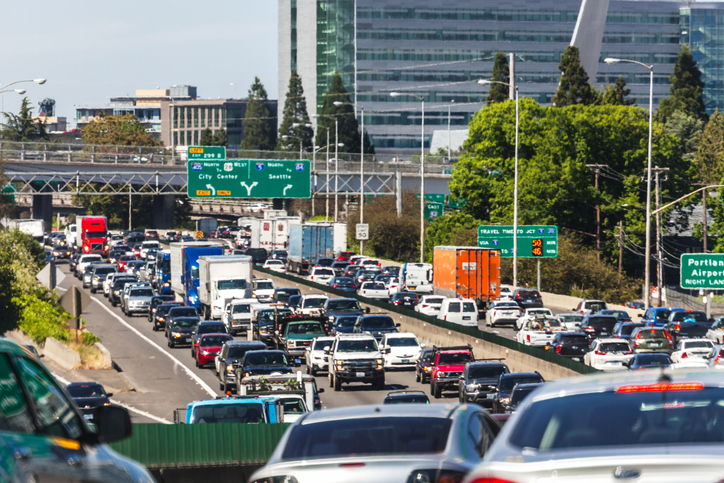
Transportation is the largest source of greenhouse gas emissions in the US, as well as a major contributor of particulate matter (PM) and other pollutants that harm public health. The National Highway Traffic Safety Administration (NHTSA) has been regulating fuel economy since the passage of the Energy Policy and Conservation Act (EPCA) in the 1970s with the aim of conserving fuel and improving vehicle efficiency.
In December 2025, the Trump administration issued a proposal to “substantially recalibrate” the CAFE program. Specifically, NHTSA proposes to significantly reduce the stringency of light-duty vehicle standards, resetting the MY 2022 through 2026 passenger vehicle standards to a 0.5 percent increase, a 0.35 percent increase for MY 2027, a 0.25 percent increase for MY 2028, and then a 0.25 percent increase per year through 2031. The proposal would result in a fleetwide average of approximately 34.5 mpg in 2031. NHTSA argues that these weakened standards represent the “maximum feasible” fuel economy standards that “best reflect and balance the various practical considerations and limitations mandated for the CAFE program.”
NHTSA offers two alternative scenarios in addition to this preferred option, which use different starting points and offer different ramps for future years, with Alterative 3 requiring slightly more stringent fuel economy increases in later years.
Our quick take a looks at fuel economy proposal and details the issues we’ll be watching as NHTSA finalizes it.