This is update to an August, 29, 2025, post.
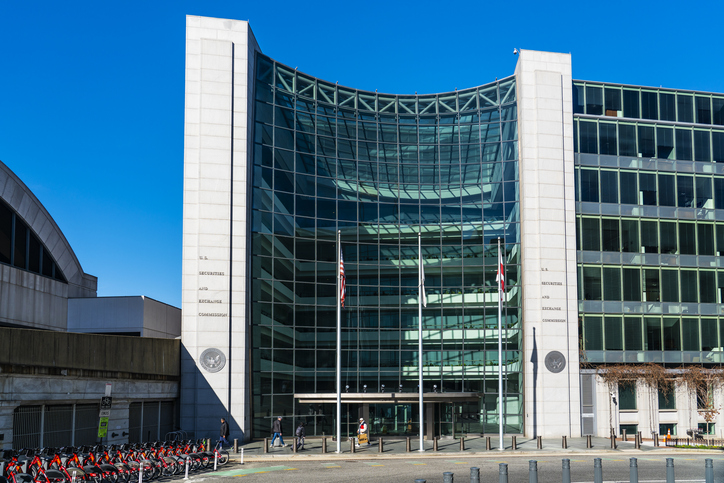
In March 2024, the Securities and Exchange Commission (SEC) finalized its climate-related risk disclosure rule, which would have required public companies to report on material climate-related risks that affect their business and required some large companies to disclose their greenhouse gas emissions, if material. Industry, state attorneys general, and NGOs immediately challenged the rule. The SEC opted to suspend the rule’s implementation as the litigation proceeded, so it never took effect during the Biden administration. Under the Trump administration, the Commission has declined to defend the rule, though it has taken no steps to rescind it despite stating that the majority of current Commissioners believe SEC lacked statutory authority to promulgate the rule. In July 2025, the SEC announced the unusual step of asking the Eighth Circuit to make a legal decision about the rule. The Eighth Circuit rejected the administration’s request in September, stating that the case will be held in abeyance until the administration reconsiders the final rule or renews its defense.
This quick take describes how we got here, the Commission’s unusual request to the court, and what we are watching as the case proceeds.
Biden Administration Rule
The climate-related risk disclosure rule, which the SEC finalized but never implemented, would have required public companies to disclose information about material climate-related risks in SEC filings to elicit comparable, decision-useful information for investors. Under the rule, companies would have reported on the impacts of climate-related risks on the company’s strategy, business model, and outlook, and steps the company had taken to mitigate or adapt, if material. Additionally, companies would report on their governance regarding climate-related risks, risk management, and climate targets and goals. Companies would report financial information about climate-related risks the company faced, including their costs, expenditures, and losses related to severe weather events. A subset of large companies would also disclose their scope 1 and 2 greenhouse gas emissions, if material. The rule would have established a safe harbor from private litigation for some of the disclosures. See EELP’s analysis for a summary of the rule and initial legal challenges to it.
Legal Challenges
Immediately following the SEC’s release of the final rule, Republican state attorneys general, private companies, and environmental groups filed lawsuits challenging it. Some challengers argued that the rule exceeded the SEC’s statutory authority, triggered the major questions doctrine, violated the First Amendment, and its issuance violated the Administrative Procedure Act (APA), while others argued that final disclosure requirements did not go far enough to protect investors. On March 15, 2024, the Fifth Circuit granted a request from industry groups to stay the rule, which paused the implementation of and compliance with rule until the court could consider the petitioners’ request for a stay pending judicial review.[1] On March 21, 2024, the Judicial Panel on Multidistrict Litigation selected the Eighth Circuit via lottery to hear a case consolidating nine circuit court challenges to the rule.[2] In April 2024, the SEC under the Biden administration voluntarily stayed implementation of the rule “given the procedural complexities of this litigation.”
On March 27, 2025, the SEC notified the court that it would withdraw its defense of the rule. The Eighth Circuit held the case in abeyance on April 24, 2025, at the intervenor states’ request.
On July 23, 2025, the SEC filed a status report that asked the court to “terminate the abeyance, continue considering the parties’ arguments, and exercise its jurisdiction to decide the case.” With this July filing, the SEC appears to be asking the court to proceed with the case which could narrow the Commission’s own authority, noting that “[t]he Court’s decision on the legal issues in the case would help determine the scope and need for further rulemaking. […] A majority of the current Commissioners believes that the Commission lacked statutory authority for the Rules, but courts have the final say on statutory interpretation.” It explains that “a judicial decision (unlike further Commission action) would conclusively resolve the dispute about the Commission’s power to adopt the mandatory disclosure obligations on climate risk in the Rules.” The SEC’s argument recognizes that rescinding the rule would take time and could be changed through rulemaking by future administrations, but a court decision rejecting the authority of the SEC to promulgate climate change-related rules could constrain future Commission rules related to this topic.
Departure from Agency Norms
While it has become common practice for an incoming administration to rescind the previous administration’s regulations, it is unusual for an agency to decline to defend a rule in litigation while also declining to rescind the rule. The APA requires rescissions of notice-and-comment rules like the SEC climate-related risk disclosure rule must go through the same notice and comment process as the original rule. Sometimes, a new administration may ask a court for a voluntary remand of a challenged rule so the agency can rescind or reconsider its prior decision using the normal rulemaking process. However, this can be time consuming and labor-intensive, which has led some administrations to try to have courts to vacate regulations instead to avoid the need to justify a recission. Alternatively, a new administration may alter the government’s litigation position to argue against a rule it had previously defended, asking a court to vacate a previous administration’s rule and leaving any intervenors in the action to defend the rule.
Here, the SEC is no longer defending the rule and instead asking the court to proceed with the case and issue a decision on the merits (rather than voluntary remand). This approach departs from the norms of legal procedure, calling into question whether a presumption of regularity is warranted. The state respondents that are now defending the rule argue that “this Court should continue to hold these petitions in abeyance until SEC clearly indicates what it intends to do with the Rules, including whether it will rescind the Rules if the Court upholds them.”
Eighth Circuit Response
In September 2025, the Eighth Circuit responded to the administration by rejecting its request, stating that the case will be held in abeyance “until such time as the Securities and Exchange Commission reconsiders the challenged Final Rules by notice-and- comment rulemaking or renews its defense of the Final Rule.” The court explained, “It is the agency’s responsibility to determine whether its Final Rules will be rescinded, repealed, modified, or defended in litigation.” While the Commission asked for a decision on the merits, which could have constrained the legal authority of future administrations as courts no longer defer to an agency’s reading of a statute after Loper Bright v. Raimondo, the court put the onus back on the Commission to either defend or alter the rules.
Looking ahead, will be watching to see how the Commission responds to the court and whether it takes steps to review or rescind the rule, which is currently complicated by the staffing challenges of the government shutdown that began on October 1. As this case proceeds, will also track reporting requirements from the European Union and California, which are leading the way for corporate climate disclosure. Follow along on our climate disclosure regulatory tracker page.
[1] Liberty Energy v. SEC, Docket No. 24-60109 (5th Cir.).
[2] State of Iowa, et al v. SEC, Docket No. 24-01522 (8th Cir).