Current Status
Following President Trump’s April 2025 executive order Unleashing America’s Offshore Critical Minerals and Resources, the Bureau of Ocean Energy Management (BOEM) and the National Oceanic and Atmospheric Administration (NOAA) have taken steps to facilitate commercial deep sea critical minerals mining, both within the United States exclusive economic zone and in international waters beyond national jurisdiction.
Why it Matters
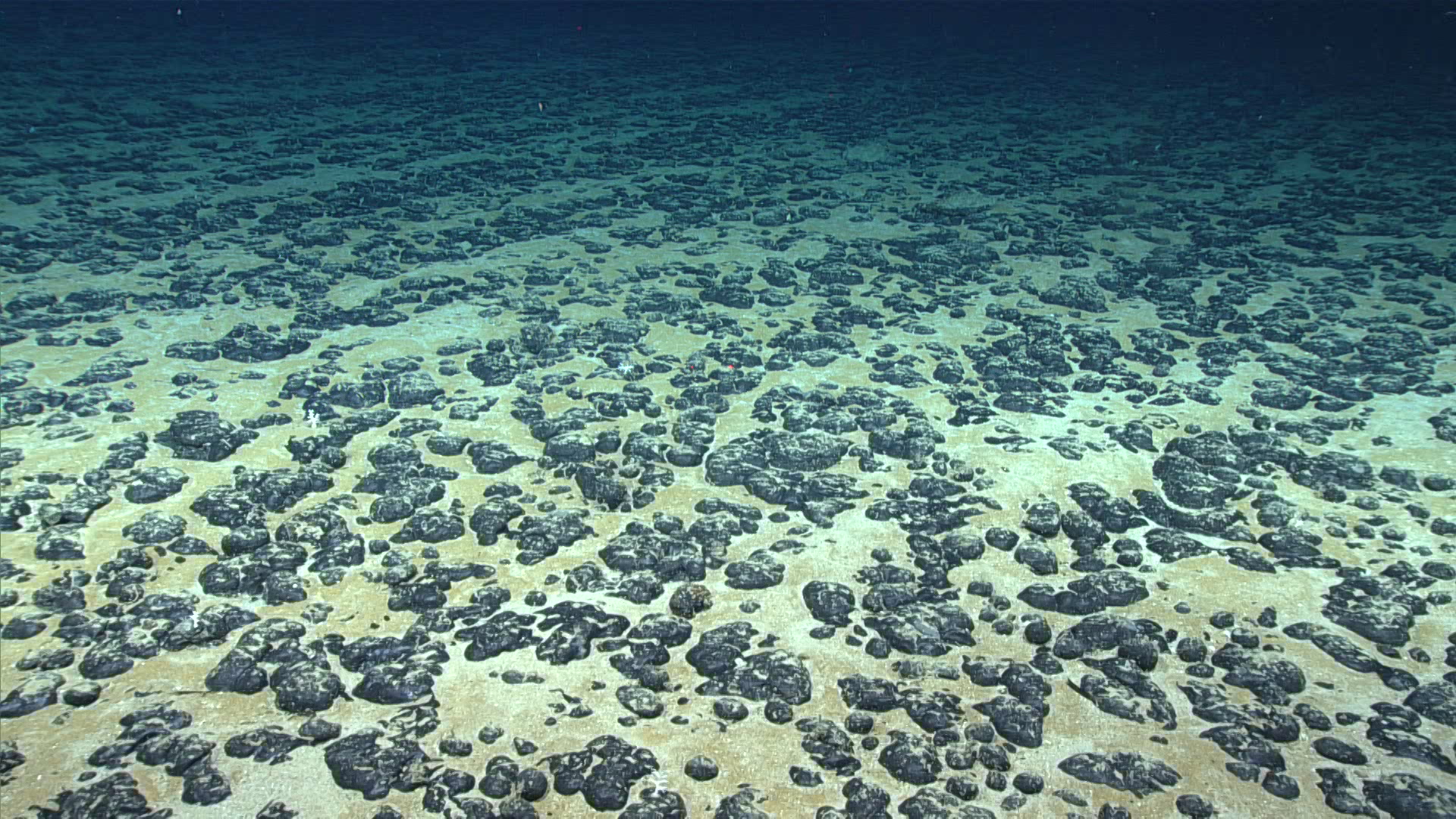
Demand for critical minerals, such as lithium, cobalt, and nickel, has increased due to their importance in batteries, wind turbines, consumer electronics, and more. Although these minerals can be found on land, they are also present in polymetallic nodules and crusts on the seafloor. As a result, interest in deep-sea mining has increased in recent years. The environmental impacts of seabed mining are poorly understood, as the composition and distribution of marine communities on the seafloor is still under-researched.
The UN Convention on the Law of the Sea (UNCLOS), ratified in 1982, established the International Seabed Authority (ISA) in 1996, which regulates seabed mining in waters beyond countries’ national jurisdiction. UNCLOS states that seabed resources are the common heritage of humankind, and the ISA accordingly incorporates a system of profit-sharing mechanisms and reserved areas for developing countries. The ISA is currently developing regulations for commercial exploitation of seabed minerals.
The United States is the only major power that is not a party to UNCLOS. Under the 1980 Deep Seabed Hard Mineral Resources Act (DSHMRH), Congress empowered NOAA to license exploration and commercial mining in areas beyond national jurisdiction (i.e., in international waters). This jurisdiction overlaps and conflicts with the authority of the ISA. Within federal waters, the Department of the Interior (DOI), through BOEM regulates seabed mining under the Outer Continental Shelf Lands Act (OCSLA).
Timeline
Jan. 29, 2026 BOEM released a Request for Information for seabed mining in multiple areas of the Alaskan Outer Continental Shelf, initiating a 30-day public comment process. The total area covers 114 million acres, and the target materials include critical minerals and heavy minerals sands.
Jan. 22, 2026 NOAA announced plans to conduct a hydrographic survey in federal waters off American Samoa beginning in February 2026. The survey is intended to map critical mineral deposits pursuant to President Trump’s April 2025 order promoting deep sea mining.
Jan. 21, 2026 NOAA published a final rule streamlining permit applications for hard mineral mining in international waters. Prospective applicants may now apply for an exploration license and commercial recovery permit simultaneously.
Nov. 12, 2025 BOEM initiated a 30-day public comment process for commercial seabed mineral mining offshore the Commonwealth of the Northern Mariana Islands.
Nov. 10, 2025 BOEM identified an 18 million acre area within federal waters off American Samoa for possible leasing. Next, BOEM will conduct an environmental analysis of leasing effects.
June 16, 2025 BOEM published a Request for Information and Interest for commercial seabed mineral mining leases offshore American Samoa. This opened a 30-day public comment period, later extended to August 15.
May 20, 2025 DOI announced that it was initiating a process to evaluate a potential mineral lease sale in the waters offshore American Samoa. DOI’s announcement cites an April 8 formal request for a lease sale from Impossible Metals.
April 24, 2025 President Trump issued an executive order, Unleashing America’s Offshore Critical Minerals and Resources, directing DOI to develop processes for permitting seabed mining on the outer continental shelf. The executive order also directs NOAA and BOEM to “expedite the process” for permitting seabed mining in international waters.